Expressions of interest are now open for Big Think 2026
You can now register your interest for an exciting edition to FDL Foundations and assist us in refining next year’s research challenges.
Please check our dedicated FAQ section below for more information. Make sure to follow our Linkedin and X or subscribe here to keep informed on any updates. You can also contact recruitment@fdl.ai with any questions.
Where Africa’s boldest ideas in science and AI take shape
The FDL Foundations Big Think is an exciting new addition for 2026. FDL’s insight is simple.
AI specialists do not always see the full depth of scientific problems. Scientists may not yet see what is possible with modern AI.
The Big Think connects these worlds.
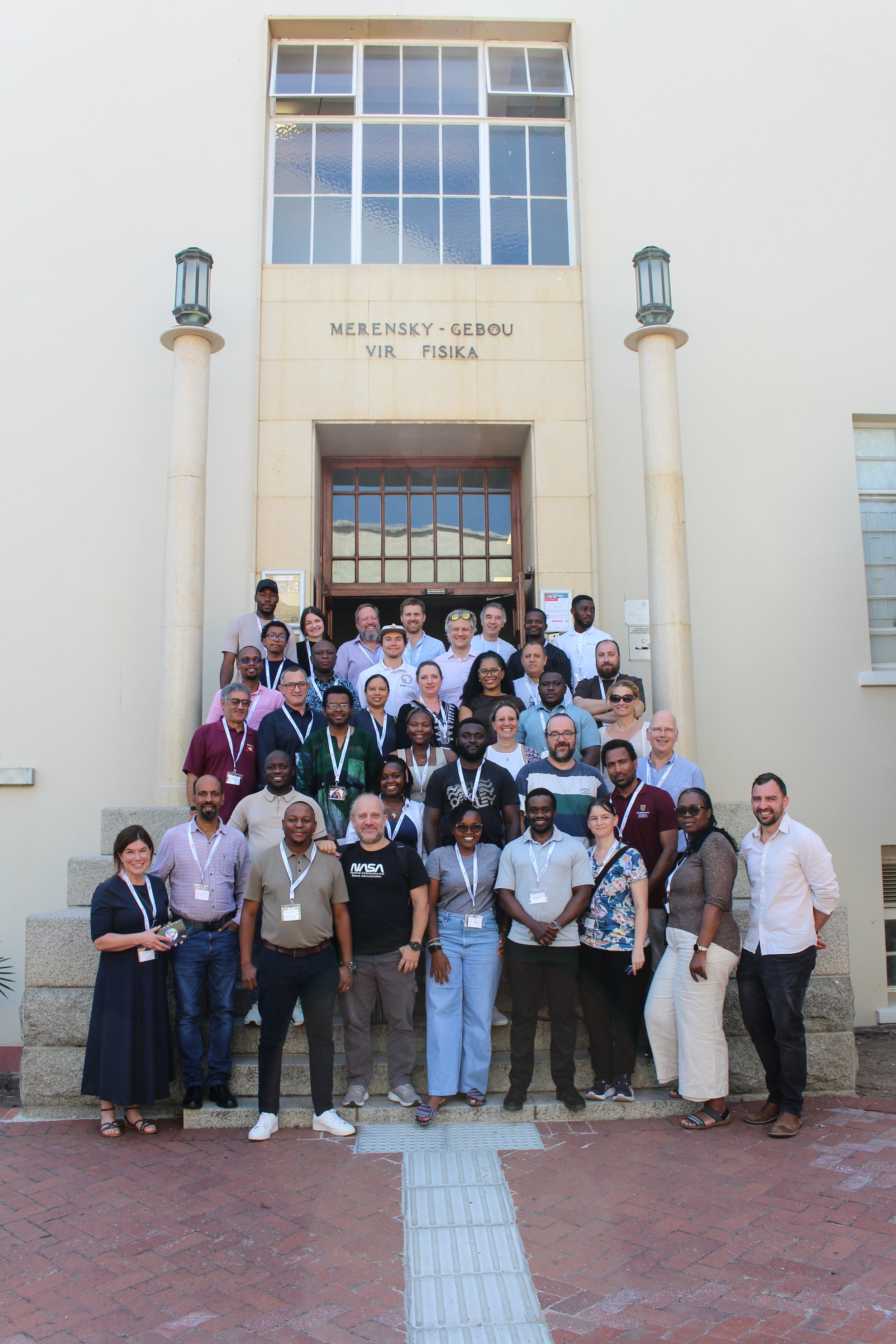
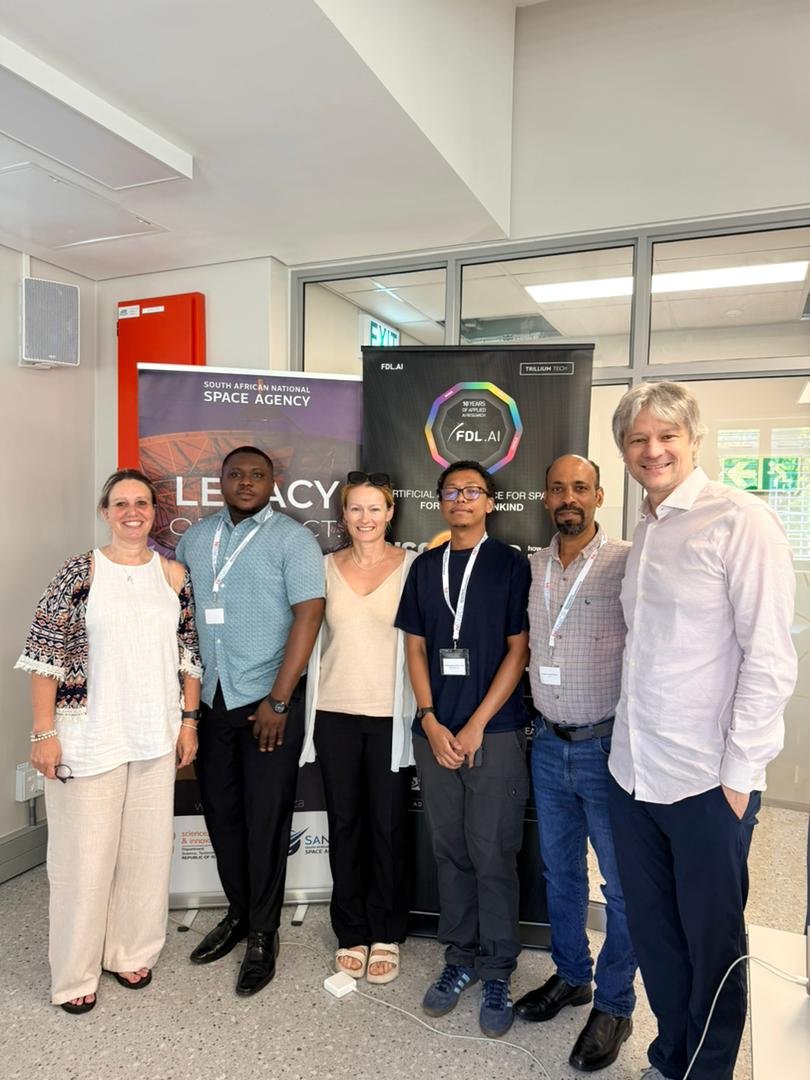
The FDL Foundations Big Think is an interdisciplinary workshop bringing together AI researchers, scientists, and African partner organisations to help shape the challenge set for the Autumn 2026 FDL Foundations sprint.
Big Think 2026
The FDL Foundations Big Think is an interdisciplinary workshop bringing together AI researchers, scientists, and African partner organisations to help shape the challenge set for the Autumn 2026 FDL Foundations sprint.
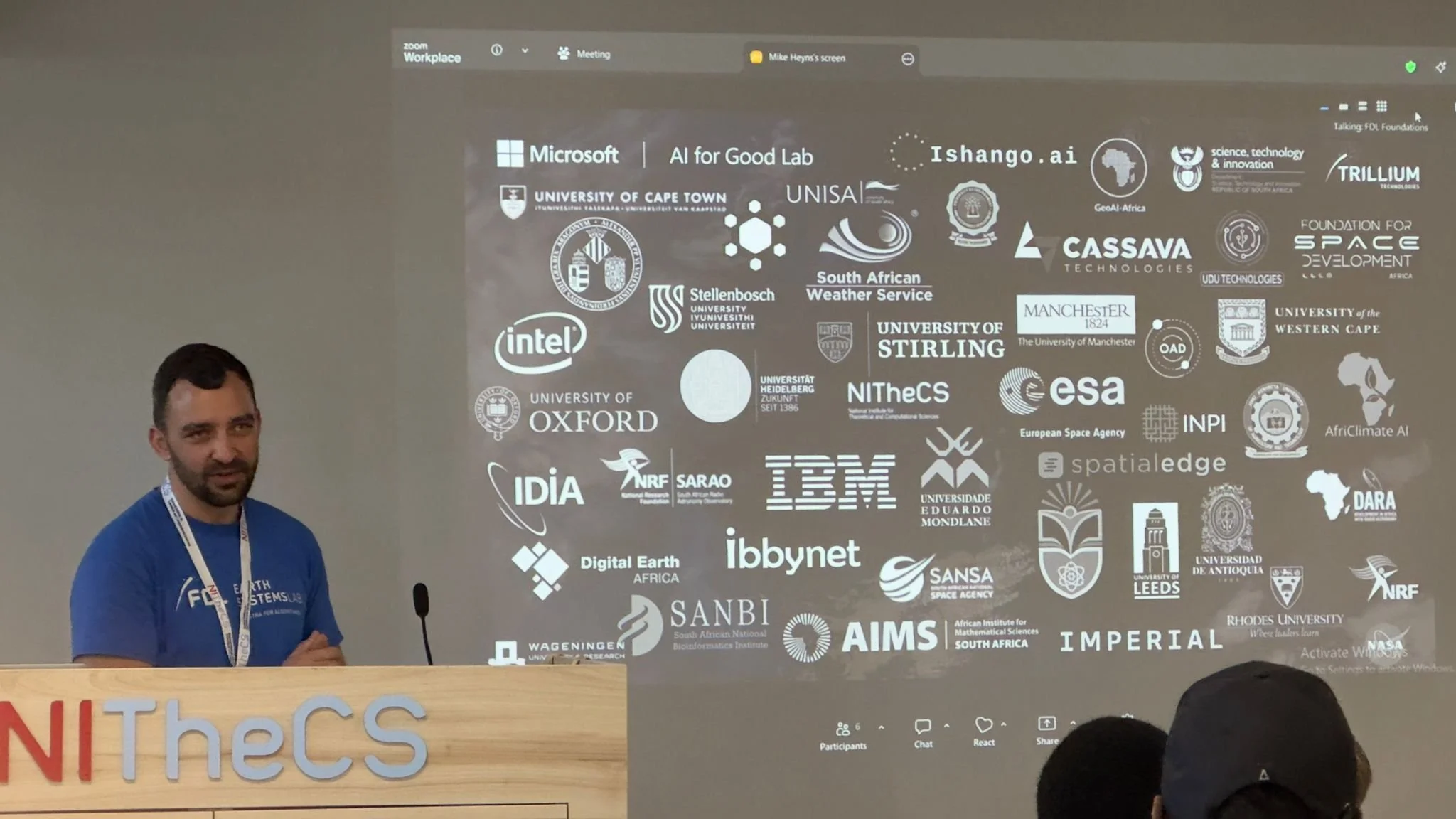
FDL Foundations (Africa), delivered in partnership with SARAO, SANSA, DARA, the University of Cape Town, Stellenbosch University and commercial AI partners such as Google Cloud and NVIDIA, brings AI researchers, domain scientists, and partner organisations together for an interdisciplinary workshop that shapes the challenges for the Autumn 2026 FDL Foundations sprint.
Two themes shape the Big Think:
Novel Applications: Practical agentic tools built on geospatial foundation models.
Scientific Discovery: New science outcomes powered by agentic analysts.
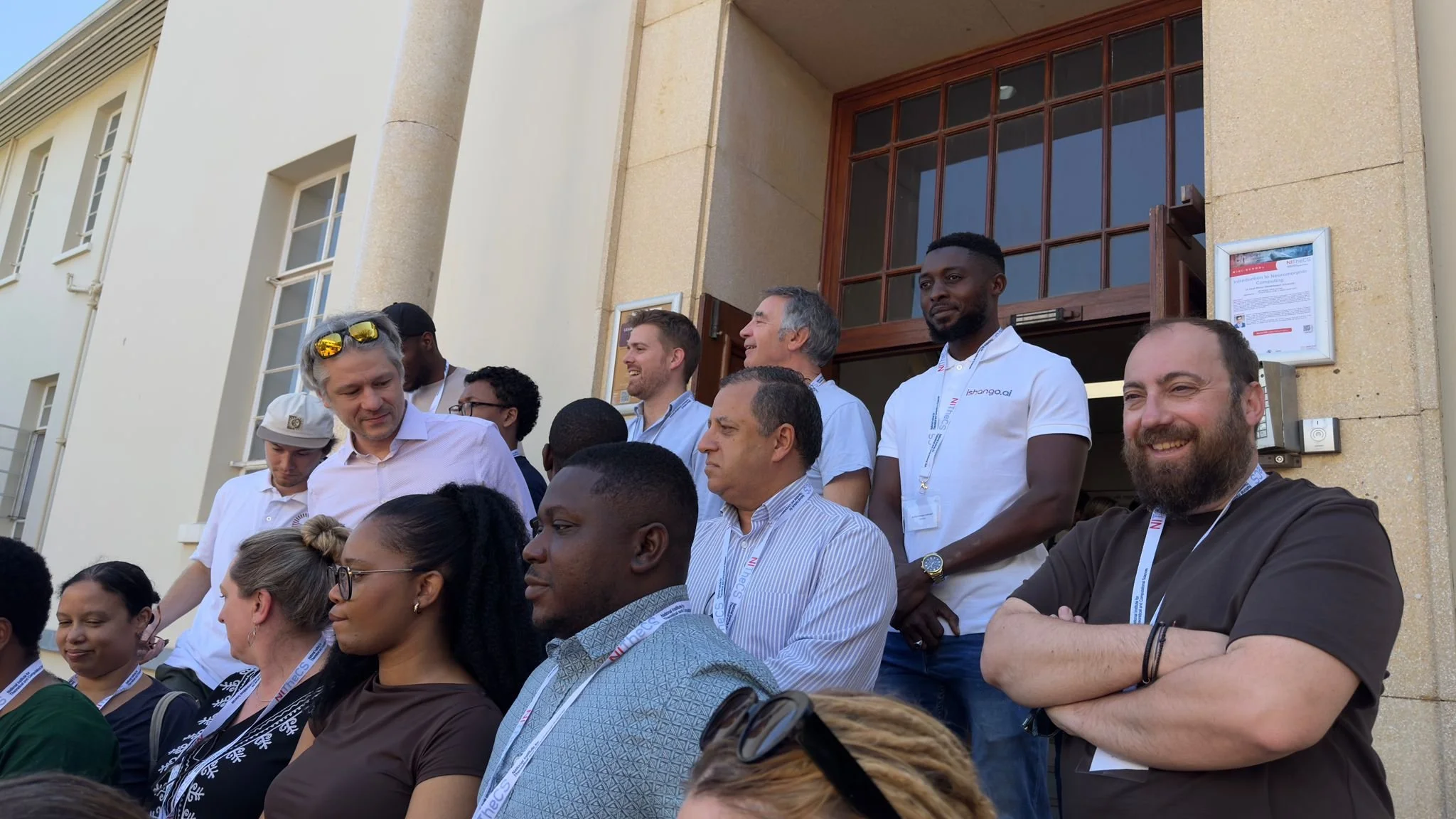
The FDL Foundations Big Think will take place 9 - 10 March, 2026. Attendance options include in-person or virtual, which will be held over two days at NITheCS in Stellenbosch, Cape Town.
Agenda
Monday, 9 March
09:00 - 10:00
Arrival
Registration and welcome pack pick-up, with networking over tea/coffee.
Online waiting room for virtual participants.
10:00 - 11:15
Opening Session
Welcome remarks and a brief introduction to the workshop's mission and goals.
Invited talks from partners, i.e., SANSA, DARA, SARAO, NITheCS.
11:15 - 11:30
Morning Break
11:30 - 12:30
Culture Session
IEstablishing FDL culture for the following sessions. Facilitated by Belina Raffy.
12:30 - 13:30
Lunch Break
13:30 - 15:00
Track 1: Novel Applications I
Session 1:
[30 minutes] Scene setting for the session, including 5-minute expert lightning talks.
[15 minutes] Briefing for the group break-out session.
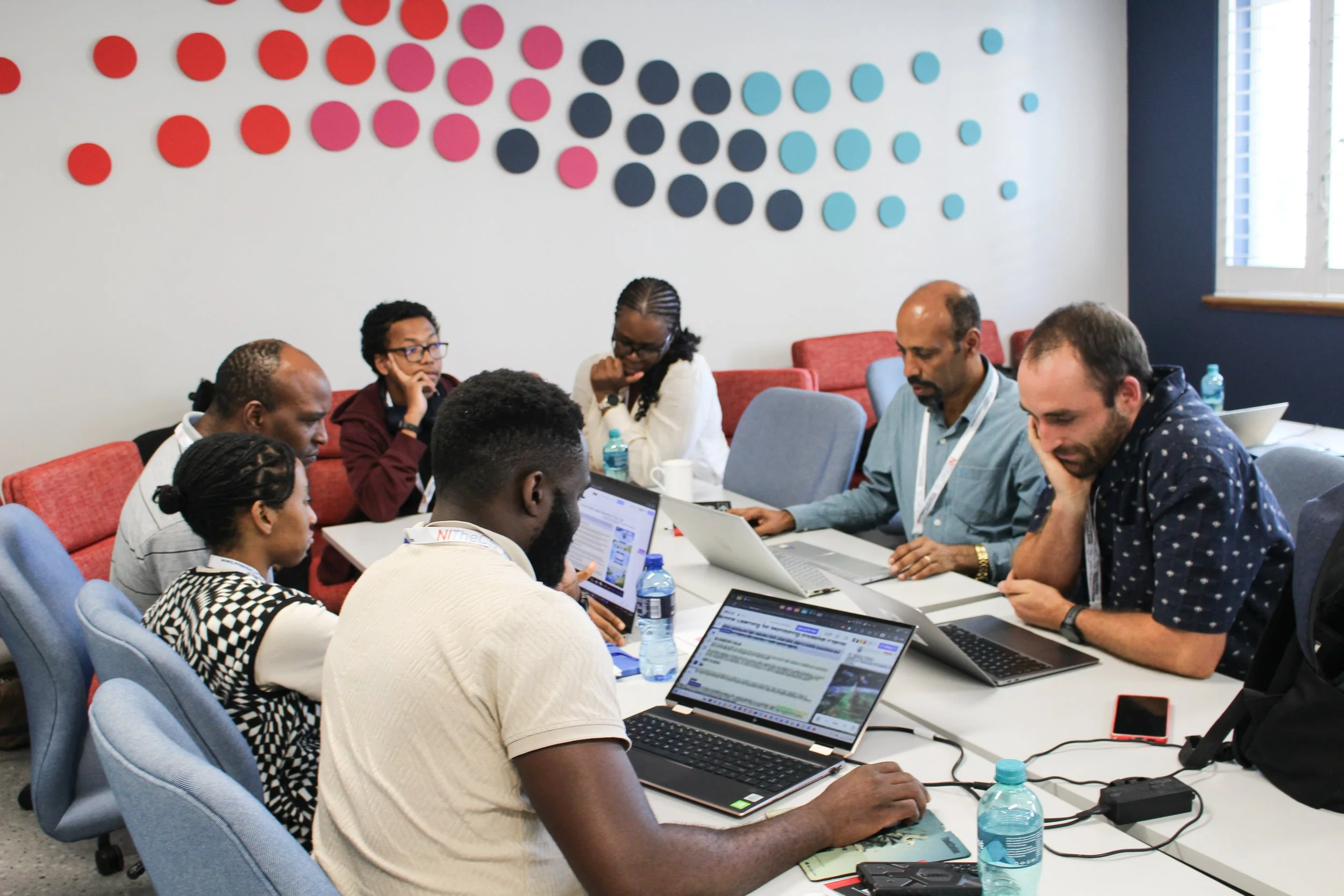
[45 minutes] Group break-out session for new idea generation using template 1-pagers. Each group consists of 3-4 people. Aiming for at least 2 ideas per team. Groups are randomly allocated.
15:00 - 15:30
Afternoon Break
15:30 - 17:00
Track 1: Novel Applications II
Session 2:
[15 minutes] Share-back, each group shares a 60 sec pitch of their ideas.
[45 minutes] Group break-out session for new idea generation using template 1-pagers. Each group consists of 3-4 people. Groups are randomly allocated.
[15 minutes] Share-back, each group shares a 60 sec pitch of their ideas.
[15 minutes] Ideas are collated, and dot voting takes places to identify the most interesting ideas.
17:00 - 17:15
Closing (Day 1)
Summary of the day, and outlook for the next sessions.
18:30 - 21:00
Workshop Dinner
Arrival 18:30 for 19:00
Keynote talk from Nicolas Longépé (ESA) and Juan Bernabé-Moreno (IBM)
Venue TBC
Tuesday, 10 March
09:30 - 09:40
Opening (Day 2)
Welcome and daily briefing.
09:40 - 11:00
Track 2: Scientific Discovery I
Session 1:
[20 minutes] Scene setting for the session, including 5-minute expert lightning talks.
[45 minutes] Group break-out session for new idea generation using template 1-pagers. Each group consists of 3-4 people. Aiming for at least 2 ideas per team. Groups are randomly allocated.
[15 minutes] Share-back, each group shares a 60 sec pitch of their ideas.
11:00 - 11:15
Morning Break
11:15 - 12:30
Track 2: Scientific Discovery II
Session 2:
[45 minutes] Group break-out session for new idea generation using template 1-pagers. Each group consists of 3-4 people. Groups are randomly allocated.
[15 minutes] Share-back, each group shares a 60 sec pitch of their ideas.
[15 minutes] Ideas are collated, and dot voting takes places to identify the most interesting ideas.
12:30 - 13:30
Lunch Break
While participants are having lunch, the final session is prepared with clustering of the most interesting ideas as voted for by the attendees into 4-5 challenges.
13:30 - 15:00
Feedback & Synthesis
Facilitated session to synthesise outputs into a cohesive vision:
[5 minutes] Briefing for session.
[25 minutes] Group break-out session defined by proposed ideas, with participants choosing which idea/group they want to join.
[15 minutes] Share-back, each group shares an elevator pitch of their idea.
[5 minutes] Groups reset.
[25 minutes] Group break-out session defined by proposed ideas, with participants choosing which idea/group they want to join.
[15 minutes] Share-back, each group shares an elevator pitch of their idea.
15:00 - 15:30
Afternoon Break
15:30 - 16:30
Closing Session
A summary of the workshop outcomes and a clear, committed plan for post-workshop activities.
[15 minutes] Pathway forward, with summary of the workshop outputs, an invitation to the FDL Foundations steering committee and proposed timeline for sprint.
[15 minutes] Funding environment discussion panel session, with a call to action.
[30 minutes] Closing perspectives from partners, i.e.,
SANSA, DARA, SARAO, NITheCS, ESA.
16:30 -
Departure
What happens at the Big Think?
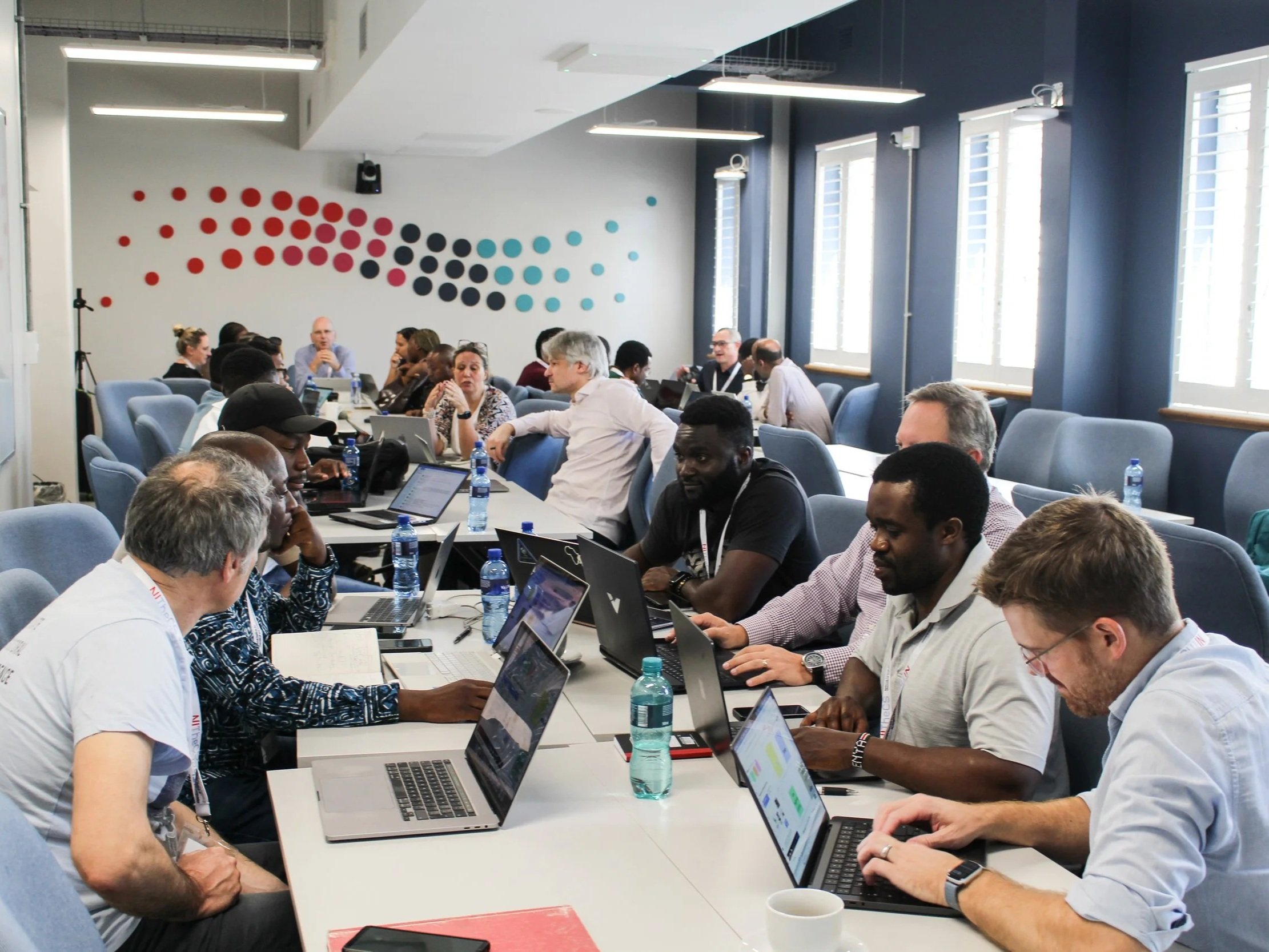
Over two structured and energising days, participants explore early ideas at the intersection of:
scientific need
data availability and readiness
modern AI and machine-learning capability
The sessions are fast, collaborative, and designed to spark new thinking, including:
Short roundtable discussions that stress-test ideas from scientific and AI perspectives
Guest insights that introduce new angles and possibilities
Breakout groups using shared capture sheets to organise thinking
Collective refinement of early “slow hunches” into well-formed challenge concepts
The strongest ideas evolve into one-page concept notes, forming the basis of the challenge set for the FDL Foundations Autumn 2026 sprint.
What is the Big Think format?
The workshop will be held over two days in Stellenbosch, Cape Town. The format of the workshop will be hybrid, with both an in person and online component. Expected in-person attendees would be around 30 persons, with roughly the same number of participants online.
FAQS
When will registrants be notified of their selection?
Applications open on December 12, 2025 and we expect to notify those selected by the middle of January 2026. Those interested will be assessed based on
I’m not sure if I meet the criteria, should I still register my interest?
We are looking for a diverse group of individuals and perspectives, so we strongly encourage you to register even if you’re not sure that you meet our criteria. Teamwork skills are just as important as anything else. That said, we expect to have many more applicants than available places, so we will prioritise registrants that align with our African partner organisations objectives.
Do I have to pay to attend the Big Think?
No. Researchers receive a stipend for the duration of the program as well as complimentary accommodations for any in-person portion of the program.
Is the Big Think a full time commitment?
No. However, should you be interested in participating as a researcher or faculty member for the Autumn Sprint, this is a full-time commitment.
We hope that in return, FDL Foundations provides a unique opportunity to work with globally recognised leaders in the field and produce career-enhancing work into the future.
Do I need to put my own research on hold?
Not for the Big Think, however, we do expect the commitment for the two days of attendance.
Should you be selected for the subsequent Autumn research sprint, teams work intensively on their projects and are expected to be present and active for the full duration. There may also be additional social activities so be prepared to be kept busy. However, we hope that the work you do during FDL Foundations will complement your research - either by providing a deep-dive introduction to emerging AI techniques to take back to your own investigations, or providing an opportunity to work shoulder-to-shoulder with world-class experts from space agencies and private sector partners.
Each year the researchers comment on the value of getting a fresh perspective and the strong relationships and friendships that are made.
What are the dates of the subsequent FDL Foundations research sprint?
The FDL Foundations research sprint is expected to take place throughout Autumn 2026. Exact dates will be confirmed in due course after the Foundations Big Think where challenges will be formulated.
This will be followed by an outreach for applications and further details will be shared when they become available.
Where does the research sprint take place?
We've successfully conducted sprints in both in-person and hybrid formats. We aim to finalise the details in the upcoming months and will keep all applicants updated on the latest developments.